Find out how big the land of Krasnokamensk is. This is a mixture of Switzerland, the Don and Finland.
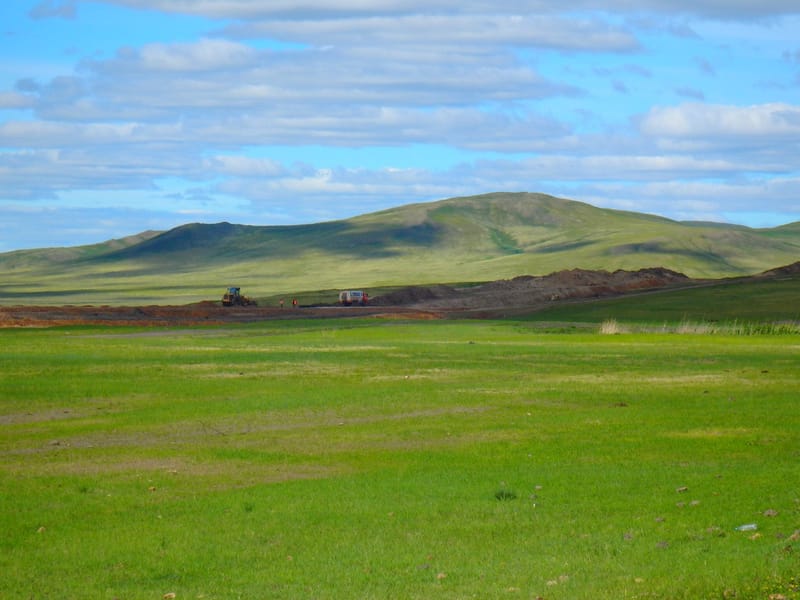
Mount Argalithui
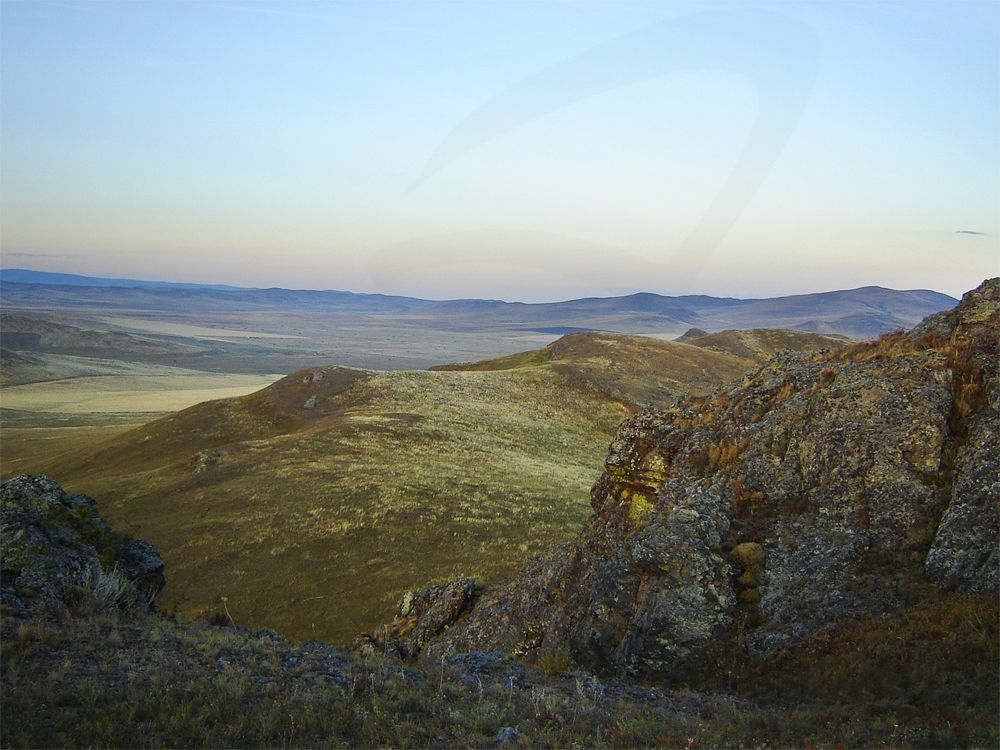
Monument of nature Mount Argalitui is located in close proximity to the village. Soktuy-Milozan, 20 km west of Krasnokamensk. The mountain is one of the peaks of the Klichkinsky Ridge (907.6 m above sea level). The local name of the mountain - Frog - is due to the fact that its gentle slopes really resemble an amphibian pressed to the ground, and two large rocky outcrops, towering above the opposite slopes, look like bulging frog eyes.
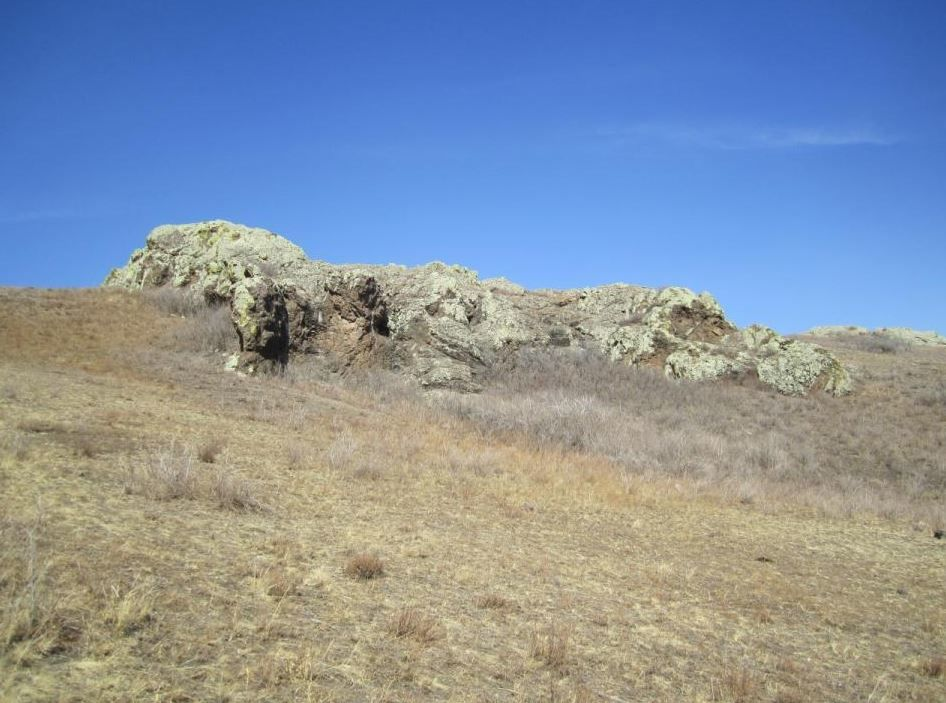
Mount Argalitui is easily accessible to the public, but this natural monument needs further research concerning, first of all, the features of natural complexes (perhaps also of a geological structure). The most attractive in terms of the prospects for the ecological and tourist use of the monument is familiarity with the community of mountain-steppe and petrophilic species of flora and fauna with their complex of specific adaptations.
The territory is located in the zone of ultraviolet comfort. Here the total radiation exceeds 116 kcal / cm. in year. The absolute minimum air temperature in winter can fall to -53 ° C, the average to -33 ° C. In summer, the air warms up on certain days to + 38˚С. In the warm and cold seasons, the winds are predominantly north-westerly and can reach speeds of 30 m / s. The area is rather dry and the annual precipitation varies between 250–300 mm. Winters are not snowy (snow depth reaches 10–15 cm.). In early spring snow cyclones come from Mongolia, which bring with them heavy snowfalls.
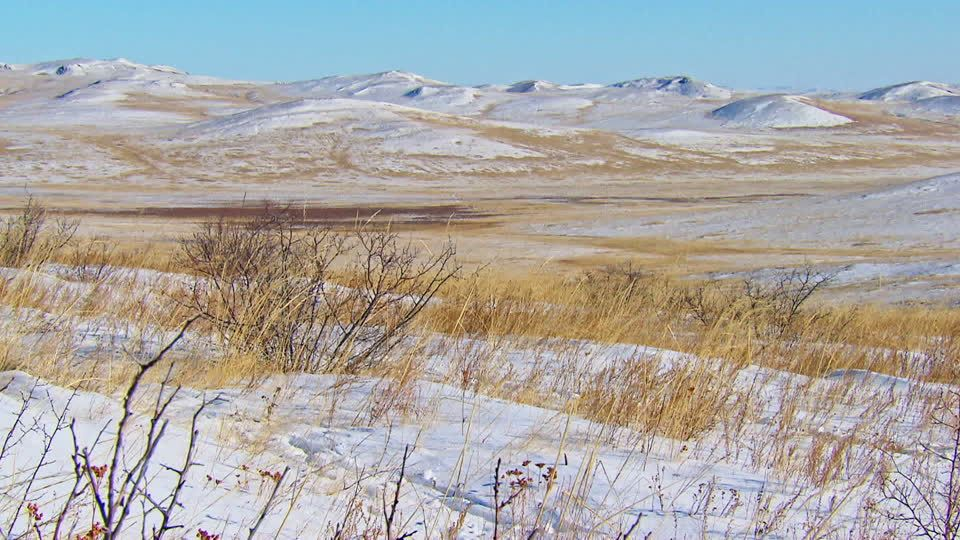 Winter Steppe
In terms of geographic zoning, the territory is located in the Agino-Argunsky hollow district, the steppe zone of ordinary and southern black soil, the Trans-Baikal lowland province. Meal-carbonate deep-frozen black earth soils dominate.
According to the hydrological zoning, the territory belongs to the Onon-Priargunsky district.
Argalitui is located among the Argun steppes, in which the predominant plants are cereals: feather grass (stipa), tonkonog, fescue.
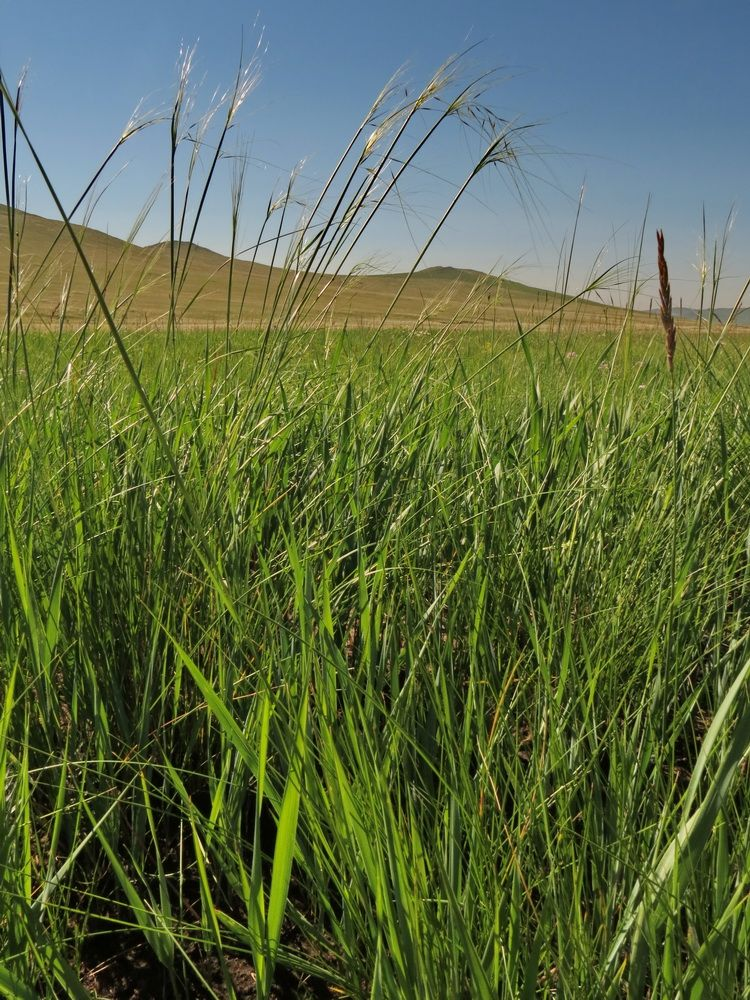
Feather Grass (Stipa)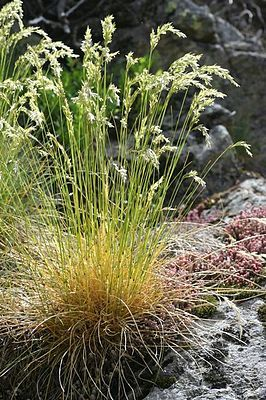
Fescue
From the top of the mountain, the observer can see the endless grassy sea for many kilometers around. The blue islands in this sea look like small steppe lakes in intermountain hollows. Such, for example, Lake Dry, clearly visible from the top of the mountain. During the dry season, this soda lake is framed by a sea tide surrounded by a wide white ring of salts dried on the surface of the soil. By the end of summer, another ring forms around the lake, this time a bright red one. This color is created by shoots of suaeda and other salty plants of the smoky family.
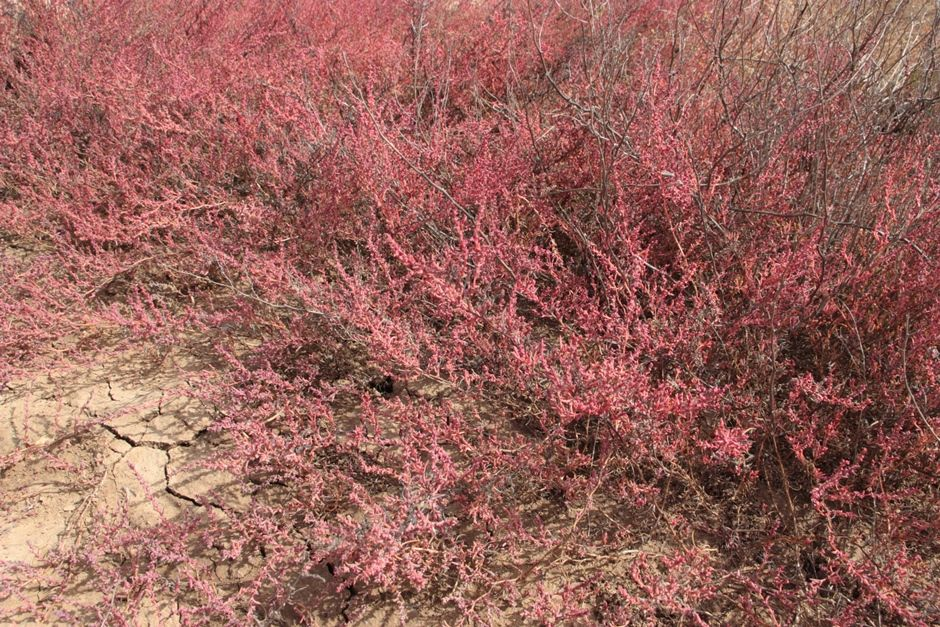 Suaeda
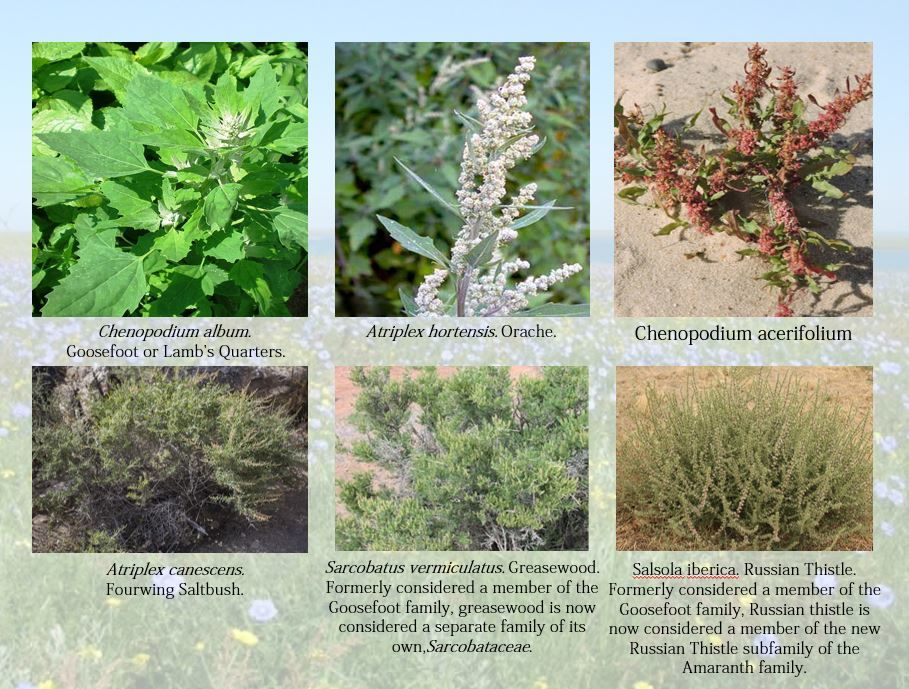
Family chenopodiaceae
The species composition of the petrophitic steppes of Mount Argalitui is in many respects similar to that in the surrounding steppe winged grass, but includes a number of petrophyte species specific to these communities: Orostachys spinosa, Eremogone capillaris, Stellaria scherleriae, Tripogon chinensis, Arctogeron gramineum, Chamaerhodos trifida. 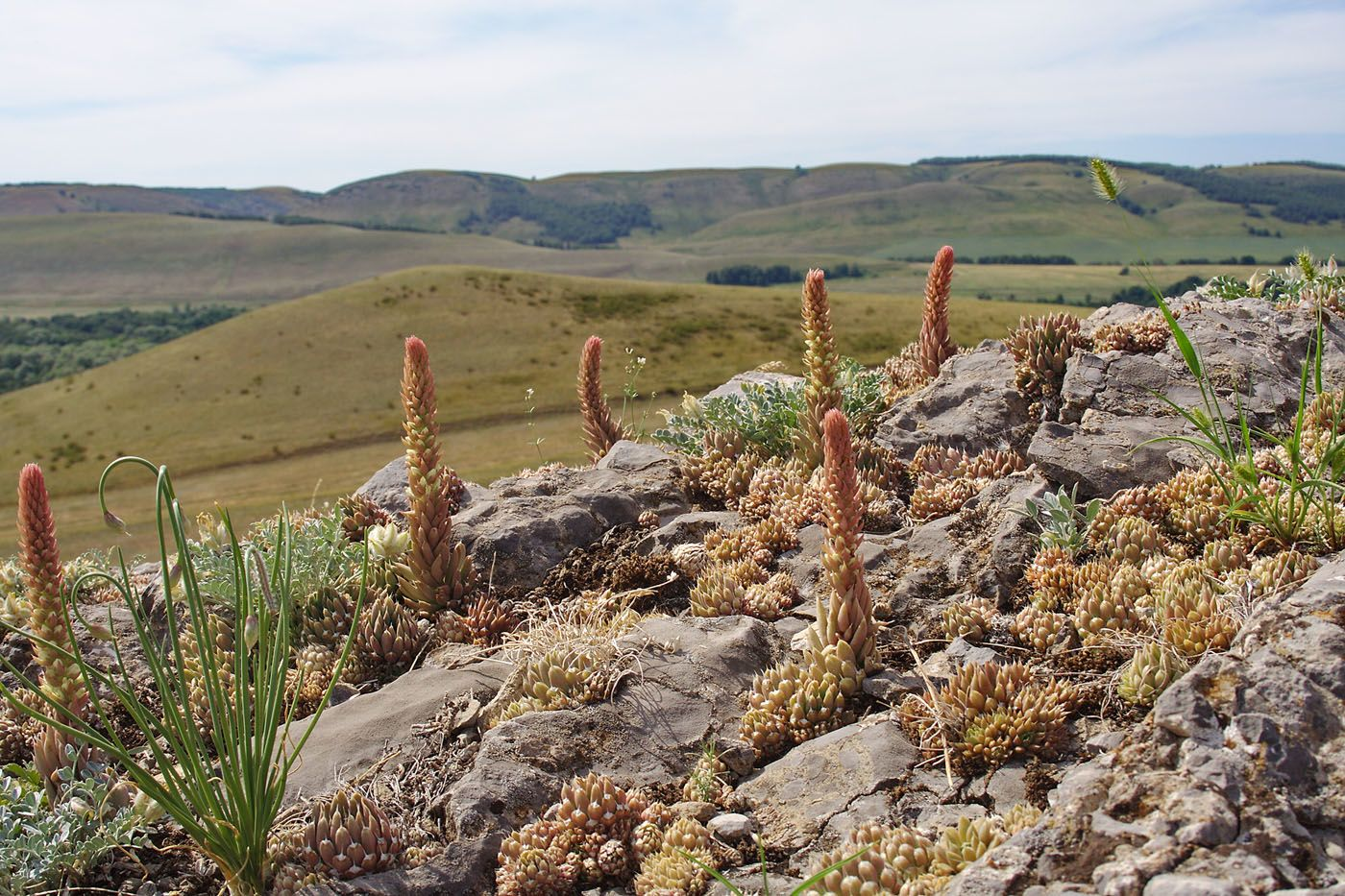 Orostachys spinosa
 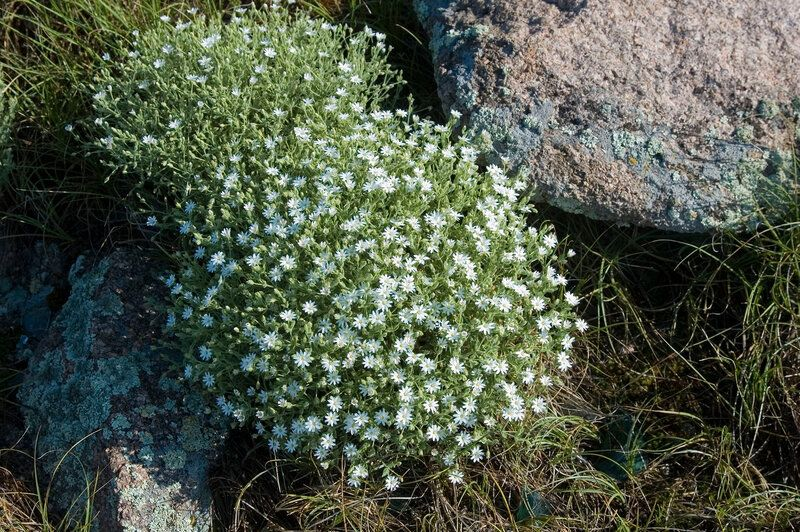 Eremogone capillaris
 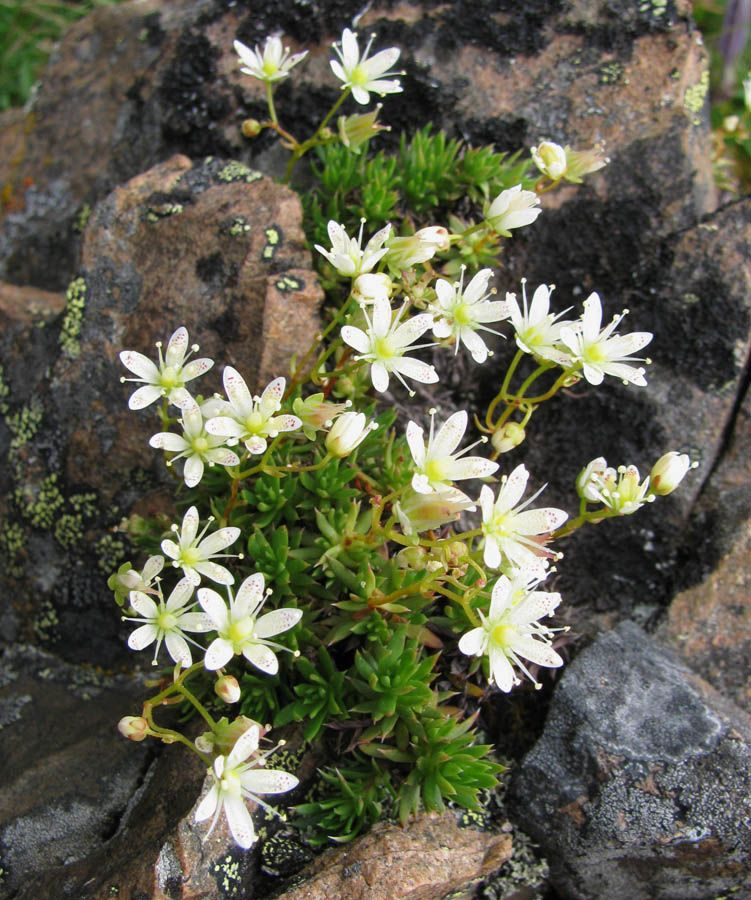 Stellaria scherleriae
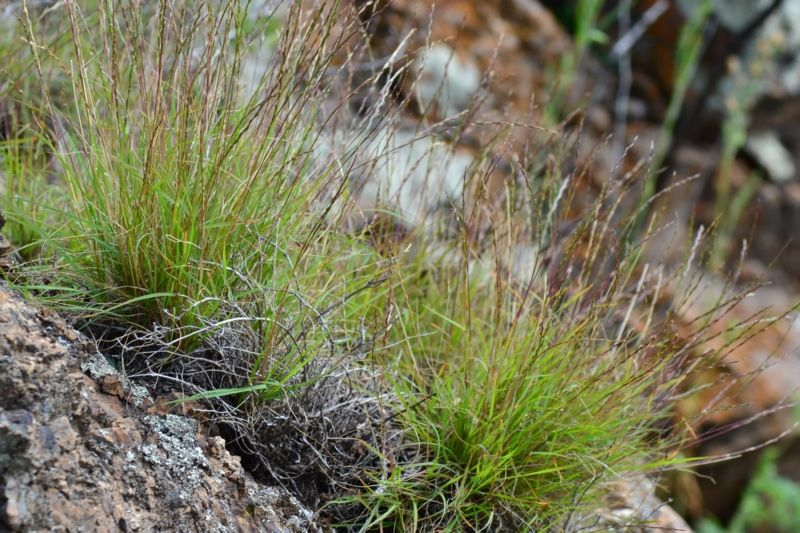 Tripogon chinensis
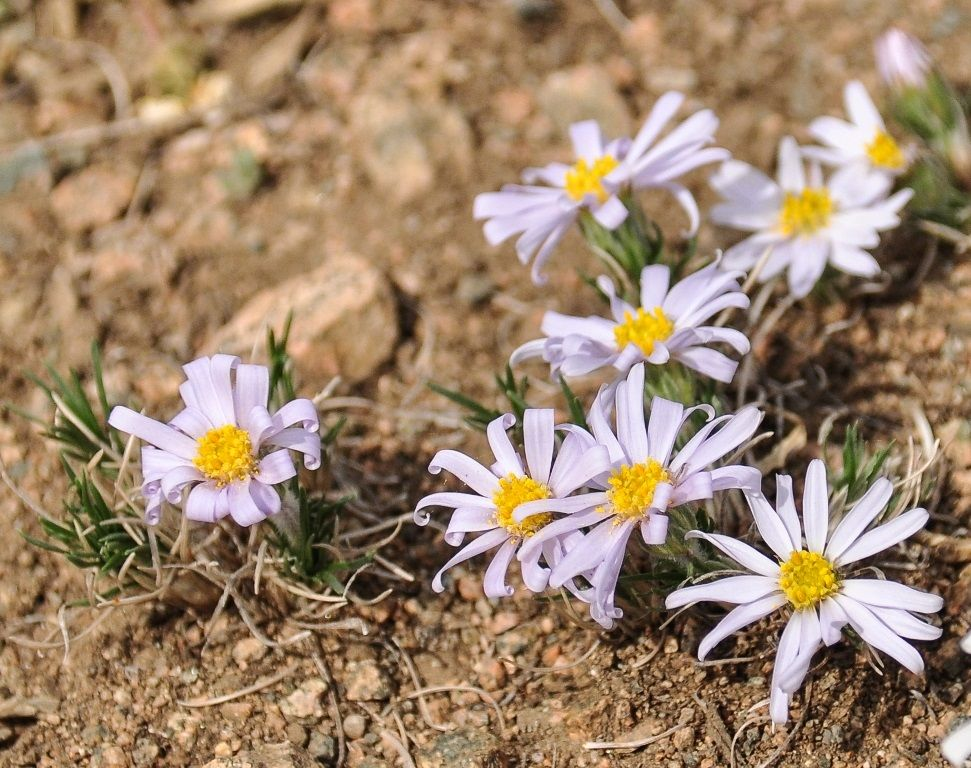 Arctogeron gramineum
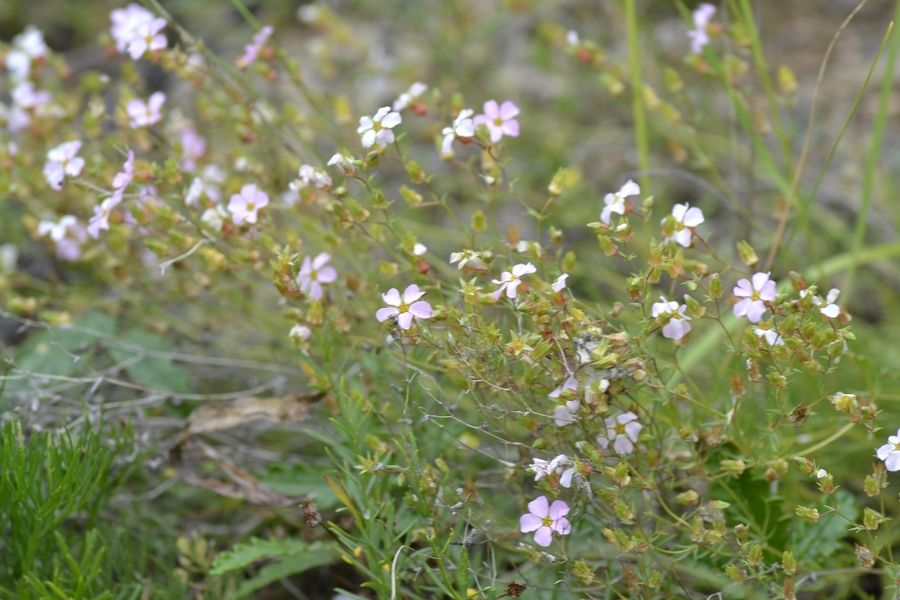 Chamaerhodos trifida
The dominants are Chamaerhodos trifida, Saxifraga spinulosa. The steep slopes of the mountain provide shelter for several bushes. It is dominated by curved shrubs of Ulmus macrocarpa with large, hard leaves that can withstand the dry air of the Trans-Baikal summer warmed in the daytime. Nearby you can find other steppe shrubs - Cotoneaster melanocarpus and Spiraea aquilegifolia.
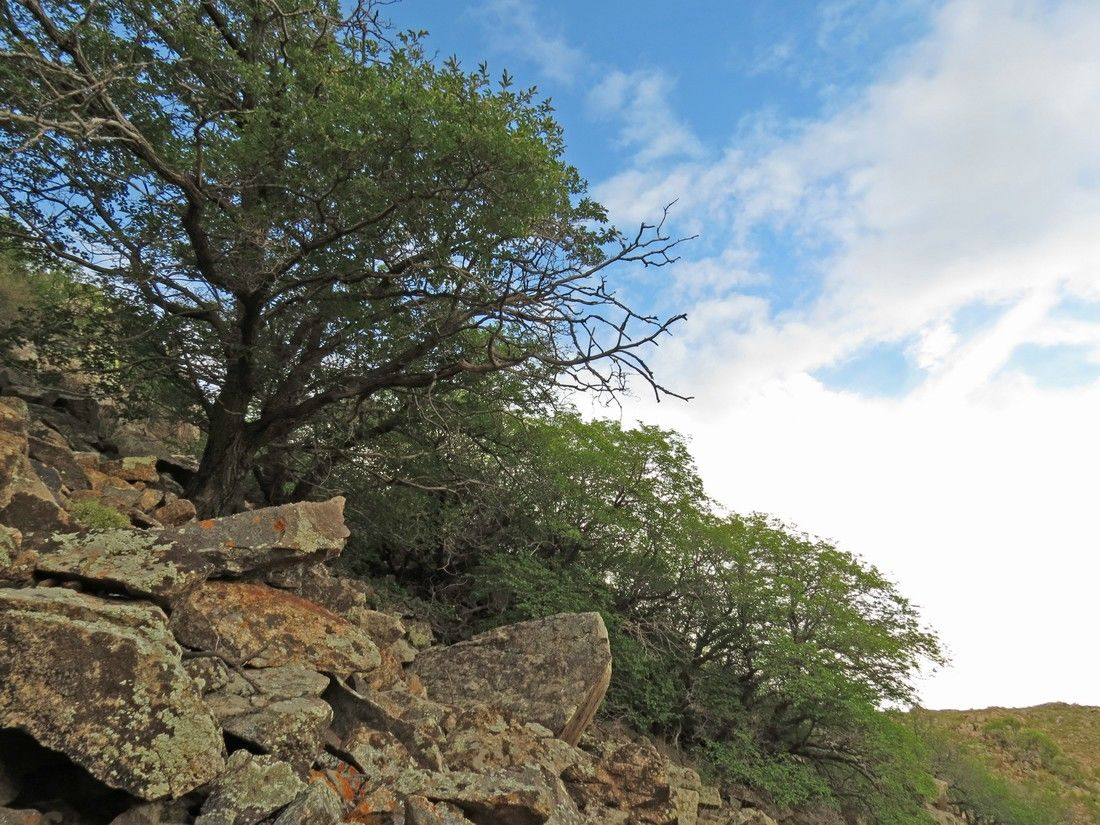
Nearby you can find other steppe shrubs - the cotoneaster melanocarpus and Spiraea aquilegifolia.
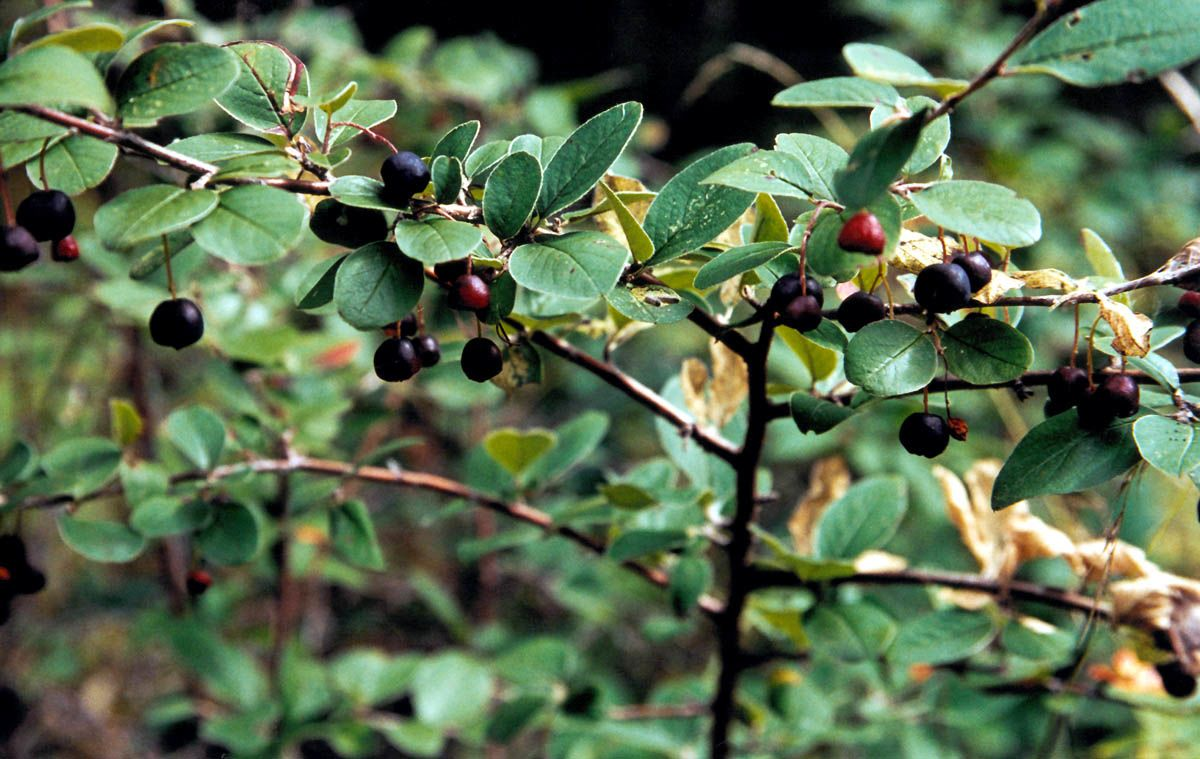
Cotoneaster melanocarpus
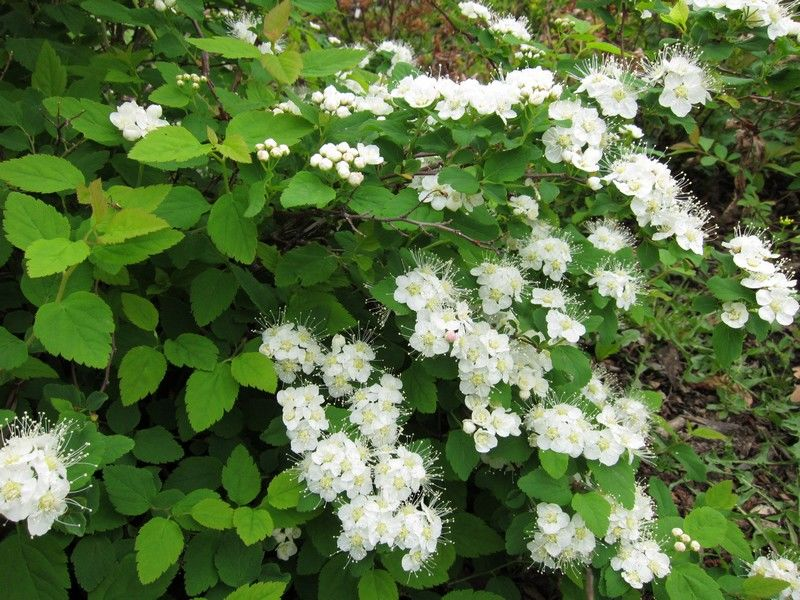 Spiraea aquilegifolia
The rocky protrusions are covered with thick spiny Saxifraga spinulosa rosettes. This plant is especially decorative at the beginning of summer, when it throws up tall arrows with panicles of white flowers. Grass growing on stones has narrow leaves that protect the plant from moisture loss. This is Chamaerhodos trifida, Arctogeron gramineum, Tripogon chinensis (this species is listed in the regional Red Book). At the foot of the rocks you can find these pillow-like plants. This is what the Stellaria dichotomy looks like, forming extremely decorative, dense, rounded bluish-green pillows strewn with small white flowers.
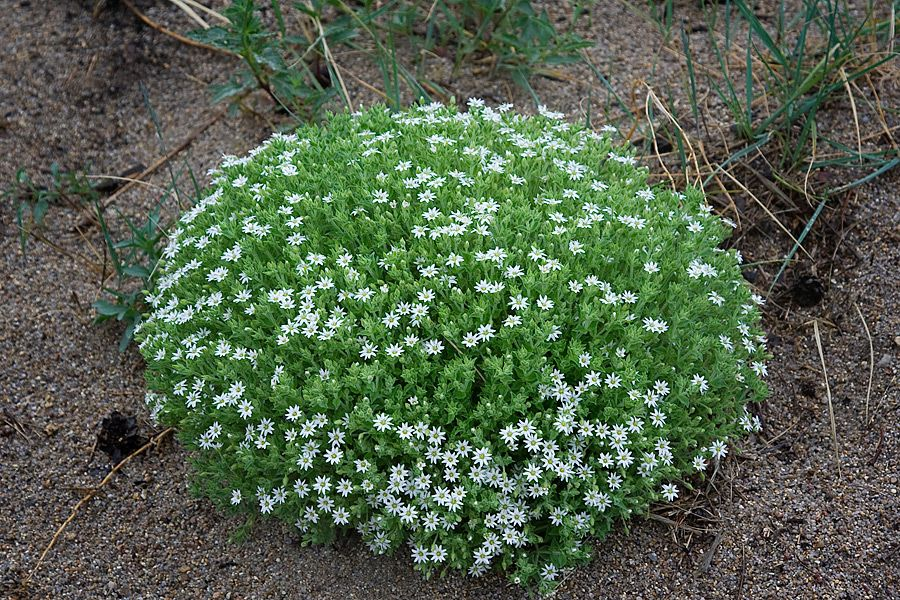 Stellaria dichotoma
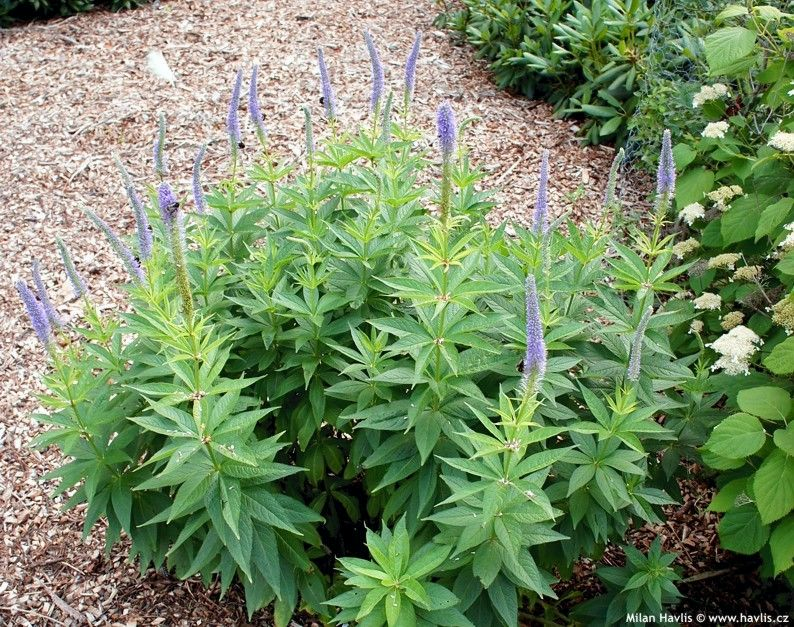
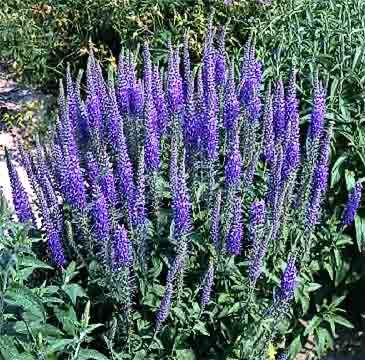
Here is what Stellaria dichotoma looks like, forming extremely decorative, dense, rounded bluish-green pillows strewn with small white flowers. Here, in shady areas, in the steppe zone, rare grass meadows are found - Veronicastrum sibiricum, Veronica longifolia.